Biomimicry-Driven Material Science

Transforming Textile Waste into the
Future of Cotton

Predictive fiber morphology modeling — replicating cotton's natural architecture from discarded textiles.

Latest News

Recent Recognition

Fiberly has been selected by two global programs in sustainable fashion innovation.

The Problem

The fashion industry generates 92 million tons of textile waste annually. Only 1% is recycled back into new garments.

Cotton — the world's most popular natural fiber — requires 2,700 liters of water per t-shirt and consumes 24% of global insecticides. Fiberly offers a fundamentally different path.

Our Process

Nature-Inspired Fiber Engineering

We study cotton's biological architecture at the molecular level, then replicate it using discarded textiles as raw material.

00

AI-Guided R&D

ML models trained on our lab data predict how process parameters affect fiber properties. Bayesian optimization picks the next experiments to run, cutting trial-and-error cycles. Computer vision scores fiber quality from microscopy images automatically.

01

Collection

Post-consumer and post-industrial cellulosic textile waste is sourced, diverting material from landfills into our feedstock pipeline.

02

Dissolution

Non-toxic solvents recover cellulose at its purest molecular state, preserving the polymer chains that give cotton its properties.

03

Biomimetic Extrusion

Spinnerets and electric fields control macro shape, surface texture, and internal structure — replicating cotton's multi-layered architecture.

04

Regeneration

Controlled phase influences cellulose molecule alignment, producing fibers with cotton-equivalent softness, breathability, and tensile strength.

05

Closed-Loop Recovery

Solvents and water are recovered in a closed-loop system, minimizing environmental impact and enabling deployment in water-stressed regions.

The Biomimicry Approach

Natural cotton fibers have a multi-layered structure: twisted ribbon-like shapes, flattened cross-sections, hollow cores, and cellulose microfibrils in different orientations. Fiberly reverse-engineers this architecture — recognized by the Biomimicry Institute's 2024 Ray of Hope Accelerator.

Why It Matters

The Environmental Imperative

92M

tons

Textile waste generated annually

10%

Of global CO₂ emissions from fashion

Our Impact

Making the World Better

Waste Reduction

Every fiber produced diverts cellulosic textile waste from landfills.

Water Conservation

Replacing virgin cotton farming saves billions of liters annually at scale.

Zero Pesticides

Eliminates dependence on the 24% of global insecticides used by cotton.

Carbon Reduction

Removes agricultural, transportation, and processing emissions.

Land Liberation

Frees arable land currently devoted to cotton for food security.

Circular Economy

Clothing becomes the raw material for new clothing — a genuine closed loop.

About Fiberly

Where Nature Meets Innovation

Fiberly is a biomimicry-driven startup headquartered in Toulouse, France, with operations in Buenos Aires, Argentina. We have developed a proprietary process that transforms discarded cellulosic textile waste into high-quality fibers that replicate the molecular architecture of natural cotton.

Unlike mechanical recycling — which produces shorter, rougher fibers that degrade with each cycle — our chemical process works at the molecular level. The resulting fibers match or exceed the softness, breathability, absorbency, and hand feel of virgin cotton.

100%

Waste-derived feedstock

Trailblazer

9 finalists

Top 9 out of 180 innovative startups worldwide.

Global Change Award

Top 20

Ranked in the top 20 out of 450+ innovations worldwide.

Regulatory Alignment

Fiberly is aligned with the EU Strategy for Sustainable and Circular Textiles, France's AGEC anti-waste law, and emerging extended producer responsibility mandates globally — positioning our technology as both desirable and increasingly necessary.

Our Team

The People Behind Fiberly
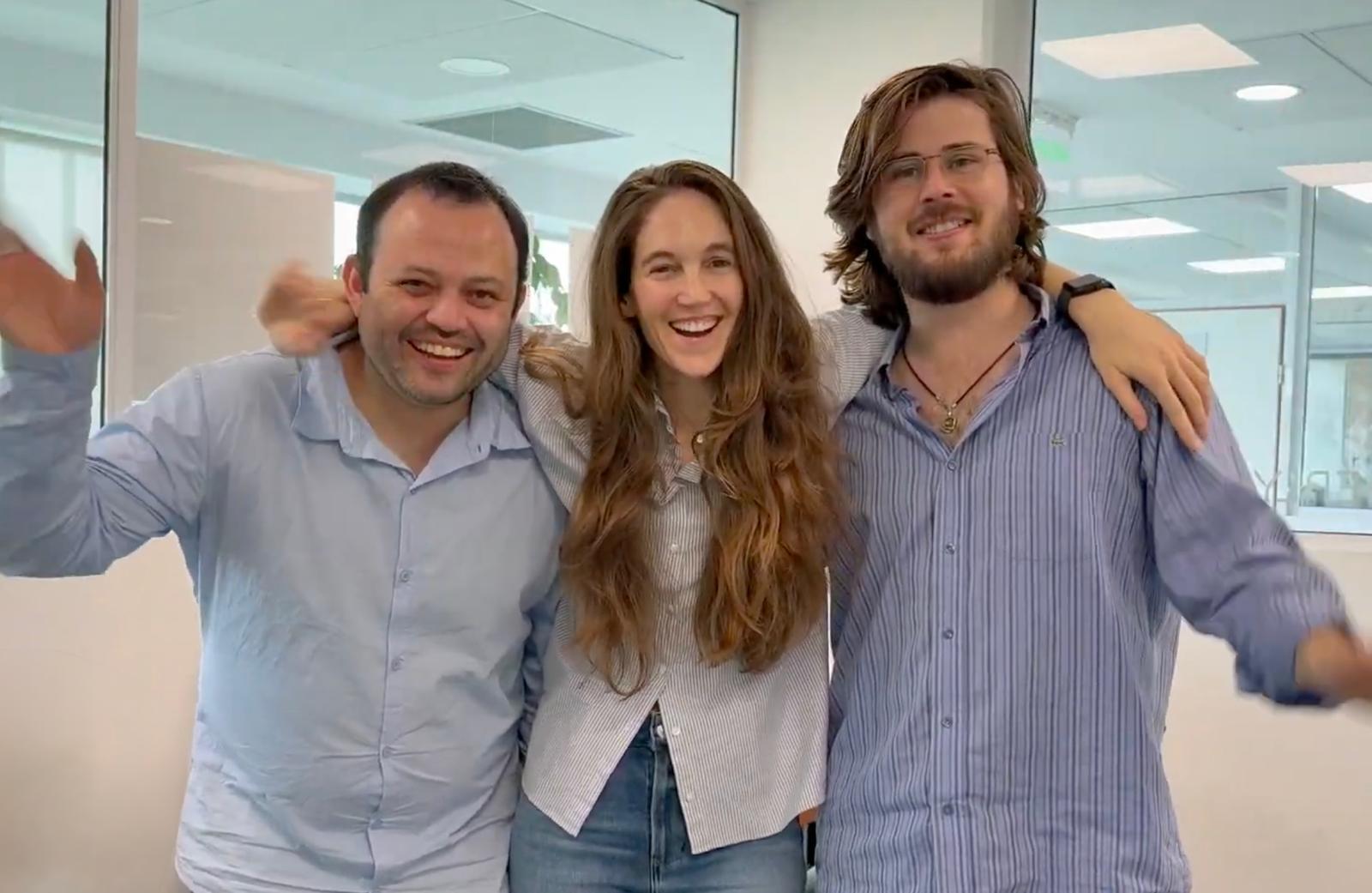
The Fiberly team — Omar, Bénédicte, and Santiago

Bénédicte

Founder & CEO

Previously built and ran the sustainability strategy of a major fashion group. Business and management degrees from Université Paris 1 Panthéon-Sorbonne, with training in climate policy.

Santiago

Lead R&D

Mechanical engineer from Instituto Tecnológico de Buenos Aires. Postgraduate in medical product design. Expertise in rapid prototyping, additive manufacturing, and end-to-end product development.

Omar

Lead R&D & Materials Scientist

PhD in Chemistry from Universidad Nacional de La Plata. Published researcher in green catalysis and polymer chemistry. Drives the chemical process for transforming textile waste into regenerated cellulosic fibers.

Partner With Us

Let's Build the Future Together

Whether you're a brand seeking sustainable fiber solutions, an investor, or a research partner — we'd love to hear from you.

Get in Touch